Introduction
Artificial Intelligence is evolving at an unprecedented pace—and the latest breakthrough is nothing short of revolutionary. A new AI system has transformed OpenClaw into a fully autonomous platform, unlocking capabilities that were previously limited by human intervention.
This leap doesn’t just improve performance—it redefines what OpenClaw can achieve. From automation to intelligent decision-making, the system is now faster, smarter, and significantly more powerful.
What is OpenClaw?
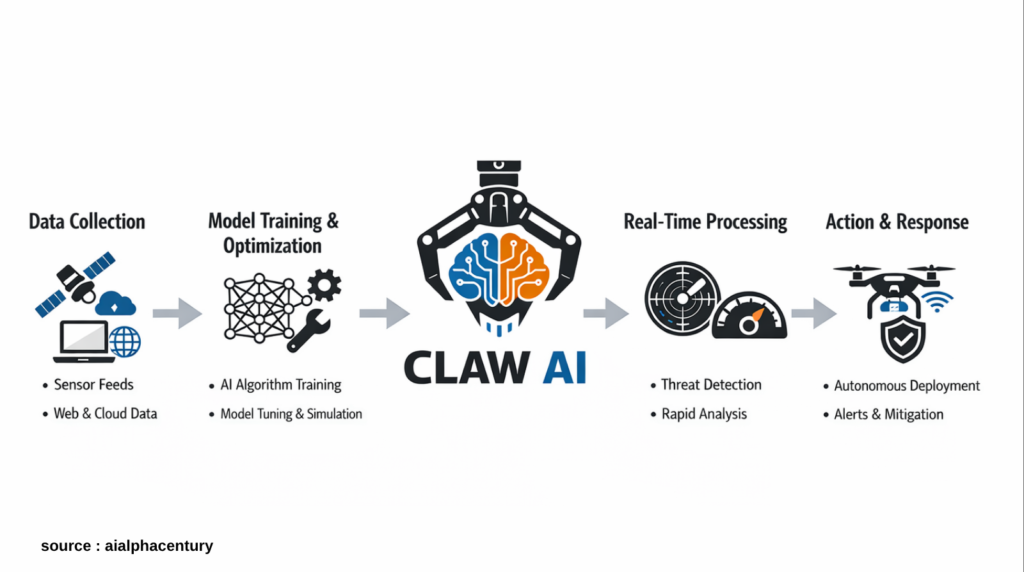
OpenClaw has long been recognized as a flexible and powerful framework designed for automation and intelligent task execution. Traditionally, it required human input at various stages—whether for configuration, monitoring, or decision-making.While effective, this semi-automated approach limited its full potential. Still wondering how it all comes together? Check out the image below for a simple breakdown of how Claw AI works.”
The Game-Changer: Full Autonomy
The integration of this new AI model removes those limitations. OpenClaw is no longer just a tool—it’s now an autonomous system capable of:
- Self-learning from real-time data
- Making independent decisions
- Executing complex multi-step tasks
- Adapting to dynamic environments
This shift from assisted automation to full autonomy marks a major milestone in AI development.
Key Features of the New Autonomous OpenClaw
1. Intelligent Decision-Making
The upgraded system uses advanced machine learning models to evaluate scenarios and make decisions without human oversight.
2. Continuous Learning
Unlike traditional systems, OpenClaw now improves over time by analyzing patterns, outcomes, and feedback loops.
3. Task Orchestration
It can break down complex objectives into smaller steps, execute them efficiently, and adjust strategies on the fly.
4. Enhanced Efficiency
By eliminating manual intervention, processes are faster, more accurate, and scalable.
Why This Matters
The implications of a fully autonomous OpenClaw are massive:
- Businesses can automate operations end-to-end
- Developers can build smarter applications with less effort
- Industries can reduce costs while increasing productivity
This technology bridges the gap between human intent and machine execution—bringing us closer to truly intelligent systems.
Real-World Applications
The upgraded OpenClaw can be applied across multiple domains:
- Cybersecurity: Autonomous threat detection and response
- Data Analysis: Real-time insights without manual queries
- Customer Support: AI-driven interactions with minimal supervision
- Operations Management: End-to-end workflow automation
Its adaptability makes it a powerful asset in nearly every industry.
Challenges and Considerations
While the innovation is impressive, autonomy comes with responsibility:
- Ensuring ethical AI decision-making
- Maintaining transparency in automated processes
- Preventing unintended outcomes
Organizations must implement proper safeguards to fully harness its power.
The Future of Autonomous AI
This development signals a broader trend: AI systems moving from tools to independent agents.
As OpenClaw continues to evolve, we can expect:
- More advanced self-learning capabilities
- Deeper integration with enterprise systems
- Increased reliance on autonomous workflows
The future is not just AI-assisted—it’s AI-driven.
Conclusion
The transformation of OpenClaw into a fully autonomous system is a major leap forward in artificial intelligence. It enhances efficiency, reduces human dependency, and opens the door to smarter, more adaptive technologies.
As industries embrace this shift, one thing is clear: autonomy is no longer the future of AI—it’s the present.
AI Alpha Century will continue tracking these developments—because the future of AI is no longer passive. It is agentic.
Also read: https://aialphacentury.com/agentic-ai-and-humanoid-robots/